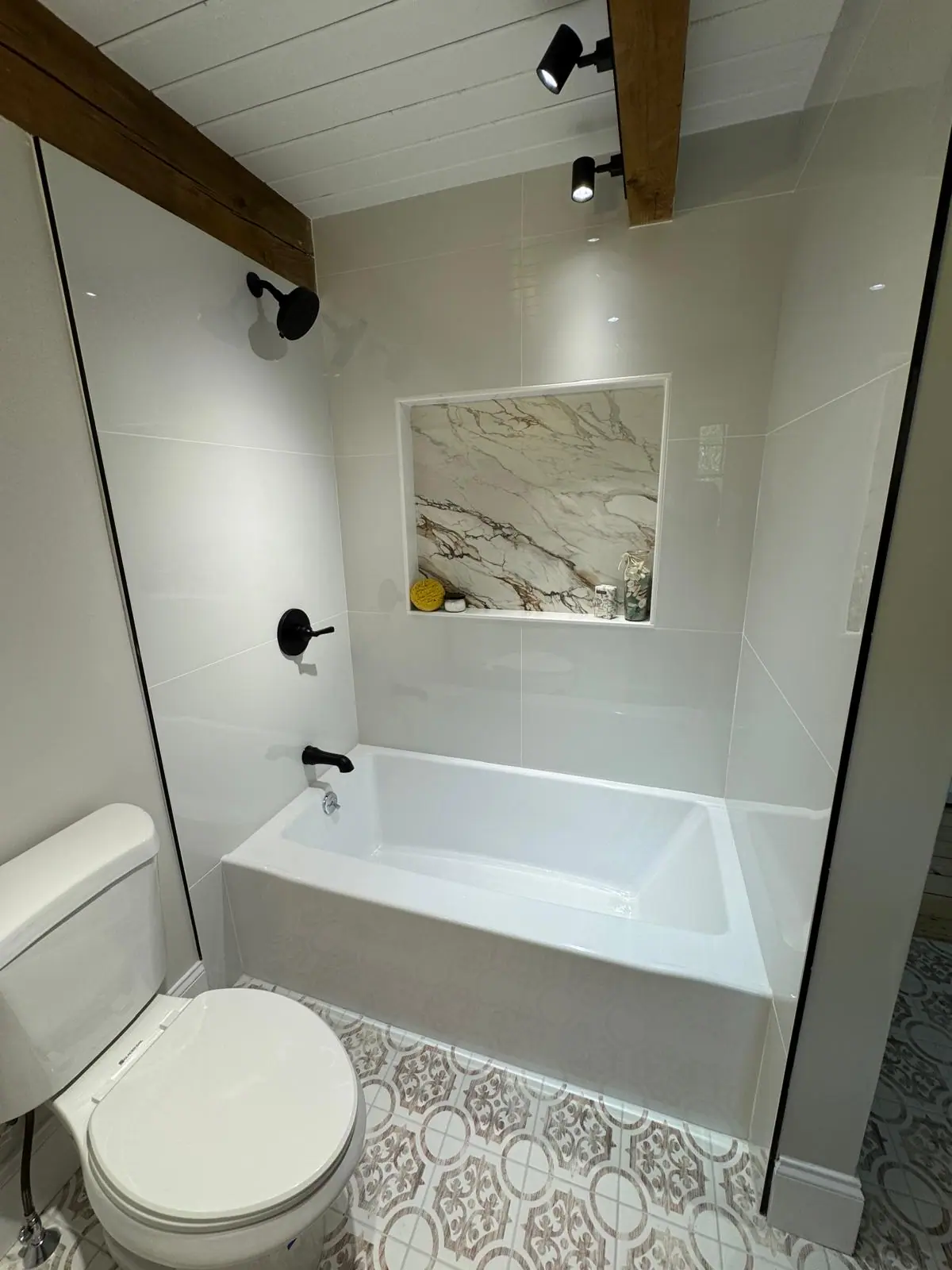
Why Shower Waterproofing Matters Before Any Tile Goes On
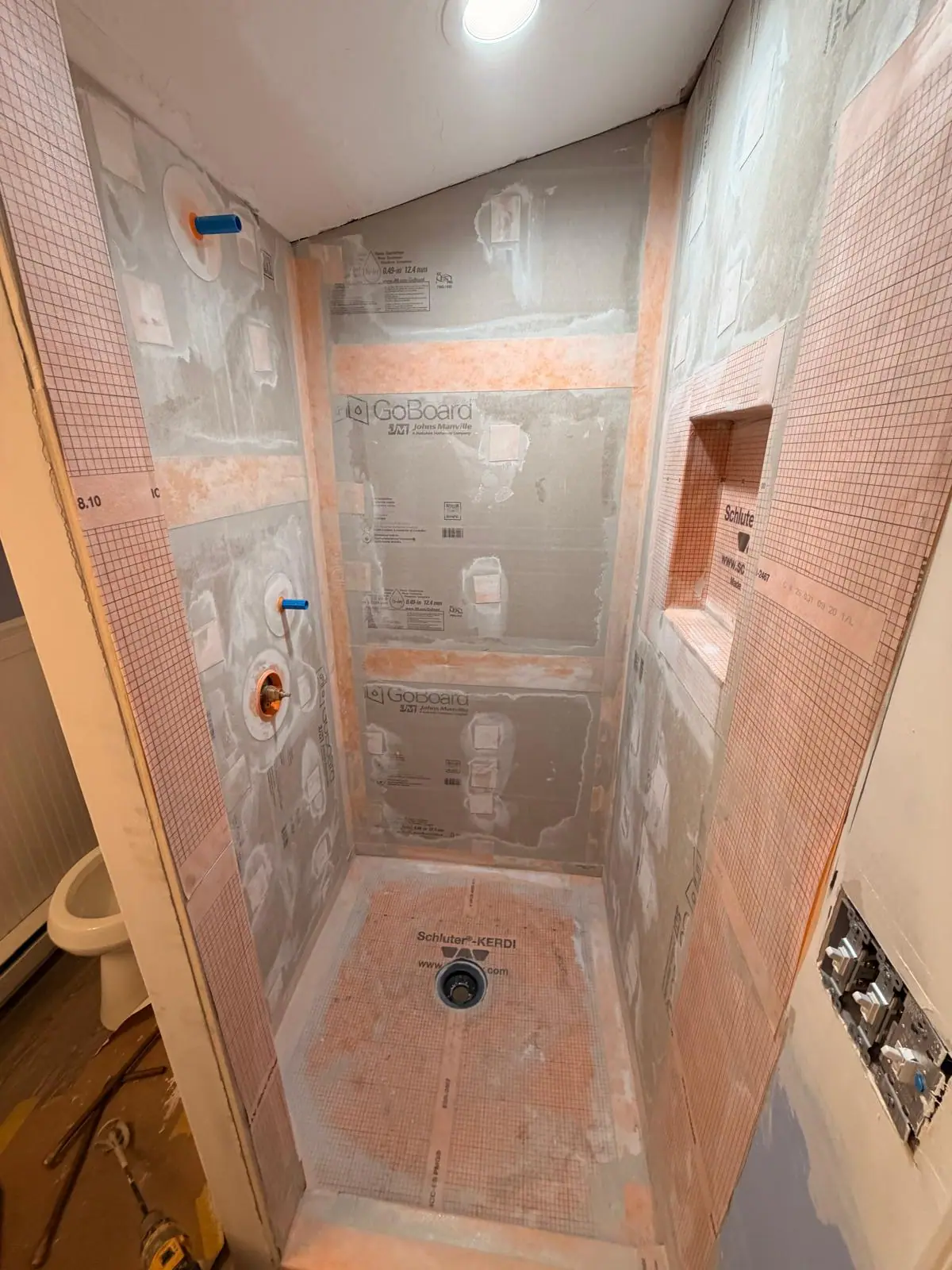
A finished shower shows tile, grout and glass. What decides how long it lasts sits behind all of that: the waterproofing layer installed before the first tile is set.
Tile and grout let moisture through
Porcelain tile itself resists water, but grout joints are porous and every shower has seams, corners and openings. Over time, water finds its way into the joints. A waterproofing membrane behind the tile stops that water before it reaches the wall framing or the subfloor.
Where the membrane goes
- Every wall inside the wet area, up to the planned height.
- The shower pan, sloped toward the drain.
- Inside and outside corners, sealed with preformed pieces.
- The valve, shower head and drain openings.
- Recessed niches and benches, wrapped like the rest of the shower.
Plan niches and benches first
Niches and benches are framed before waterproofing, so their size and position should be decided early. Moving a niche after the membrane is installed means opening the waterproofing again.
Questions to ask your installer
- Which waterproofing system will be used on the walls and the pan?
- How are the corners, seams and pipe openings sealed?
- Are the niches and benches covered by the same membrane?
Planning a new shower? See how Apex waterproofs showers before the tile goes on.